Common Mistakes Made by Chinese English Learners | Native English Reference
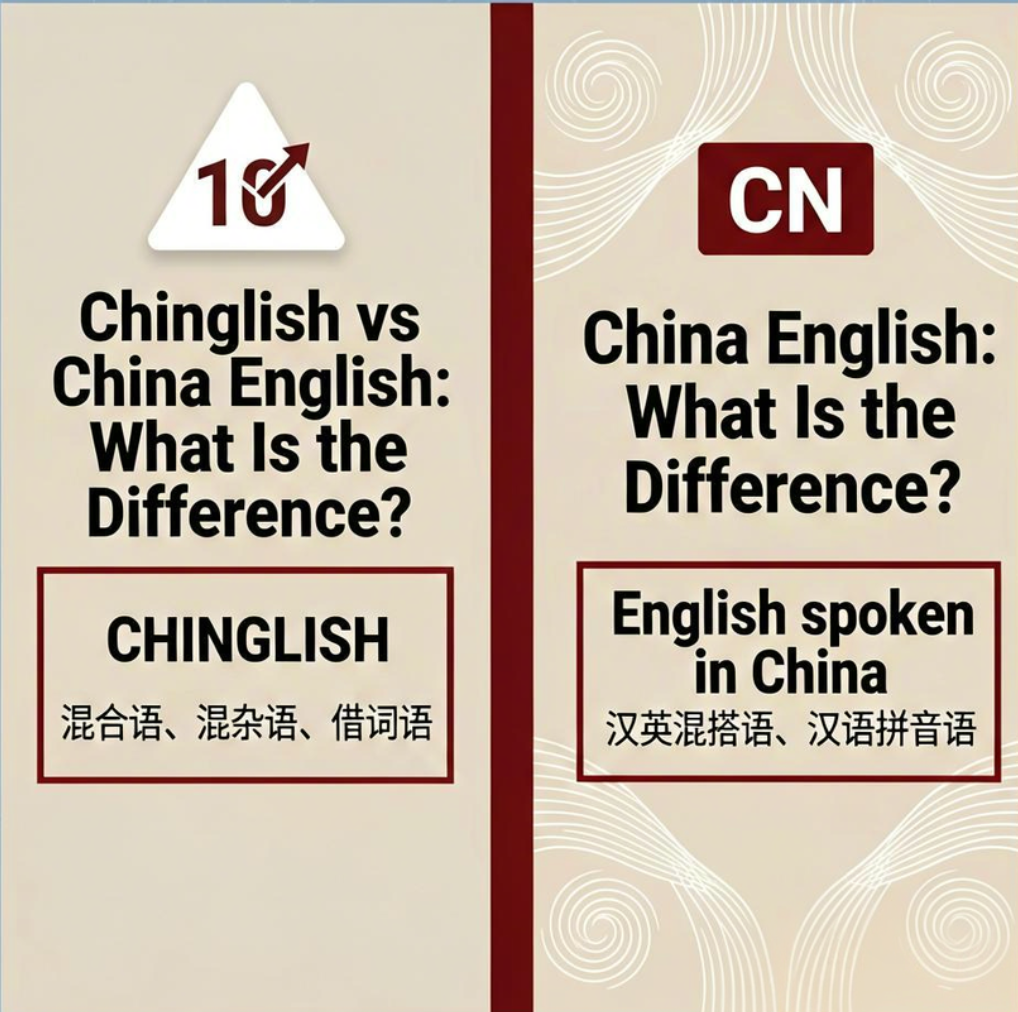
Chinglish is a non-native form of English influenced by Chinese grammar, word order, and culture. Below is a complete comparison of common Chinglish errors and natural, standard English expressions used by native speakers.
1. Daily Life Phrases
Chinese Original Meaning
Chinglish (Incorrect)
Standard English (Correct)
Turn on/off the light
open/close the light
turn on / turn off the light
The price is high/low
The price is expensive/cheap
The price is high/low
I like it very much
I very like it
I like it very much
Wait for you
wait you
wait for you
Be afraid of the dark
afraid dark
afraid of the dark
2. Personal Descriptions
Chinese Original Meaning
Chinglish (Incorrect)
Standard English (Correct)
He is very tall
His height is very tall
He is very tall
I am very happy
I very happy
I am very happy
My mother is very kind
My mother she is very nice
My mother is very kind
3. School & Study
Chinese Original Meaning
Chinglish (Incorrect)
Standard English (Correct)
Gain knowledge
learn knowledge
acquire/gain knowledge
Many students
many student
many students
Go to school
go to the school
go to school
4. Social & Cultural Phrases
Chinese Original Meaning
Chinglish (Incorrect)
Standard English (Correct)
Cheer up / Come on
add oil
come on / keep it up
Take care / See you
please walk slowly
take care / goodbye
Help yourself
eat casually
help yourself
CL
Written by Chinglish Lab Team
We explore the world of Chinglish, one phrase at a time. Discover hundreds of hilarious Chinese English expressions with meanings, origins, and real usage examples.