- 1. Add Oil | 加油
- 2. Long Time No See | 好久不见
- 3. People Mountain People Sea | 人山人海
- 4. Good Good Study, Day Day Up | 好好学习,天天向上
- 5. You Can You Up | 你行你上啊
- 6. No Zuo No Die | 不作死就不会死
- 7. You Swan, He Frog | 你是天鹅,他是癞蛤蟆
- 8. Give You Some Color See See | 给你点颜色看看
- 9. I Very Like It | 我非常喜欢
- 10. Lose Face | 丢脸
- 11. No Door | 没门
- 12. Horse Horse Tiger Tiger | 马马虎虎
- 13. Tuhao | 土豪
- 14. You Want Die? I Give You Die! | 你想死?我让你死!
- 15. Where Cool Where You Stay | 哪凉快哪呆着
- 16. Heart Tired | 心累
- 17. Cry Poor | 哭穷
- 18. One Knife Two Pieces | 一刀两断
- 19. Blow the Bull | 吹牛
- 20. Put Down a Little Bit | 放下一点点
- Why These 20 Chinglish Phrases Matter | 为什么这 20 个中式英语很重要
Chinglish — the beautiful, hilarious, and sometimes confusing blend of Chinese and English — has taken the internet by storm. From "Long time no see" (which is now standard English) to "You swan, he frog" (which broke TikTok in 2024), these phrases tell the story of cultural exchange in the digital age.
中式英语——中文和英文美妙、搞笑又有时令人困惑的混合体——席卷了互联网。从已经变成标准英语的 "Long time no see" 到 2024 年刷爆 TikTok 的 "You swan, he frog",这些短语讲述了数字时代的文化交流故事。
Here are the top 20 most iconic Chinglish examples of 2026, ranked by global popularity, cultural impact, and pure entertainment value.
以下是 2026 年最火的 20 个中式英语短语,按全球流行度、文化影响力和娱乐价值排名。
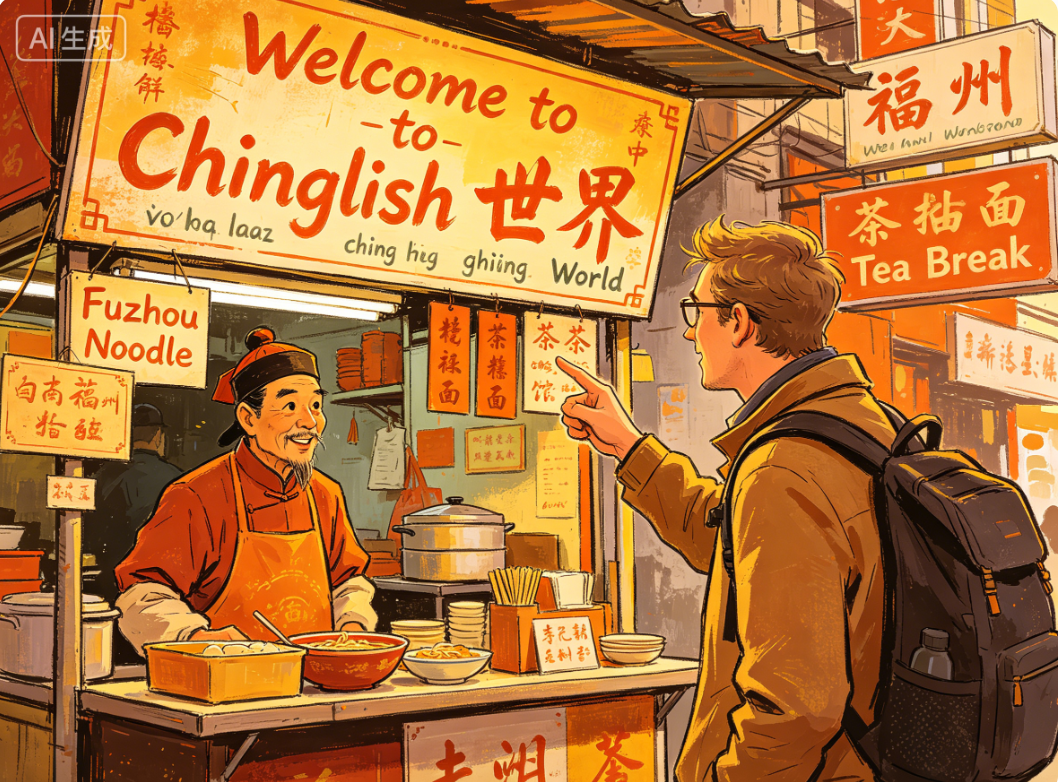
1. Add Oil | 加油
Full Meaning | 完整释义
English: "Add oil" is a direct translation of the Chinese encouragement "加油" (jiā yóu), which literally means "add fuel." It is used to cheer someone on — the equivalent of "Go for it!" or "You can do it!" In 2018, it was officially added to the Oxford English Dictionary, making it one of the few Chinglish phrases to achieve mainstream lexical recognition.
中文:"Add oil" 是中文"加油"的直译,字面意思是"加燃料"。用于为某人打气,相当于"加油!"或"你能行!"。2018 年,它被正式收录到牛津英语词典,成为少数获得主流词典认可的中式英语短语之一。
Origin & Cultural Background | 词源与文化背景
English: The phrase originated from Cantonese usage at car racing events — literally "add fuel to the engine." It spread across China and became the universal expression of encouragement. Its inclusion in the Oxford English Dictionary in October 2018 marked a historic moment for Chinglish.
中文:这个短语源于广东话在赛车活动中的使用——字面意思是"给引擎加油"。它传遍中国,成为通用的鼓励表达。2018 年 10 月被收录进牛津英语词典,标志着中式英语的历史性时刻。
🔗 Learn more: Add Oil — Full Feature Page
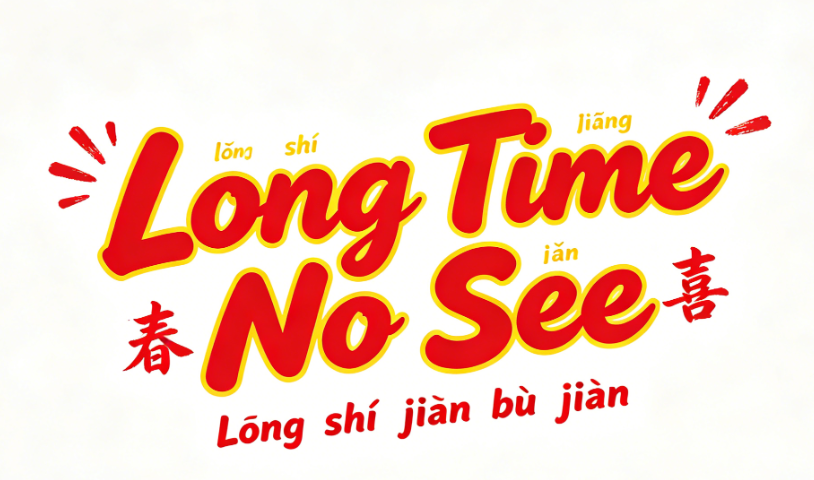
2. Long Time No See | 好久不见
Full Meaning | 完整释义
English: "Long time no see" is a greeting used when meeting someone after a long period. It is a direct calque of the Chinese phrase "好久不见" (hǎo jiǔ bù jiàn). Unlike any other Chinglish phrase, this one has been fully absorbed into standard English — most native speakers have no idea it originated from Chinese.
中文:"Long time no see" 是中文"好久不见"的直译,用于久别重逢时的问候。与其他中式英语不同,它已经完全融入了标准英语——大多数母语者不知道它源自中文。
Origin & Cultural Background | 词源与文化背景
English: The phrase first appeared in American English as early as 1900, documented in sources about Chinese Pidgin English spoken by Chinese immigrants. It appeared in American Western films and gradually entered mainstream American vernacular. Today it appears in dictionaries as an established English expression.
中文:这个短语早在 1900 年就出现在美式英语中,记载于关于华人移民所说的中国洋泾浜英语的资料中。它出现在美国西部片中,逐渐进入美国主流口语。如今已成为词典中有记载的英语表达。
🔗 Learn more: Long Time No See — Full Feature Page
3. People Mountain People Sea | 人山人海
Full Meaning | 完整释义
English: "People mountain people sea" is a hilarious literal translation of the Chinese idiom "人山人海" (rén shān rén hǎi), meaning a crowd so dense it looks like a mountain of people and a sea of humanity. It is one of the first Chinglish phrases foreigners learn when visiting China.
中文:"People mountain people sea" 是中文成语"人山人海"的搞笑直译,形容人多得像人山和人海。是外国人访问中国时最早学到的中式英语短语之一。
Origin & Cultural Background | 词源与文化背景
English: This phrase emerged from Chinese English textbooks that taught students to translate Chinese idioms into English. It was popularized by Chinese tourists abroad who used it while traveling. The vivid visual imagery made it an instant hit among English speakers.
中文:这个短语源于中国英语教科书教学生将中文成语翻译成英语。中国游客出国旅游时使用而广为人知。生动的视觉意象使其在英语使用者中迅速走红。
🔗 Learn more: People Mountain People Sea — Full Feature Page
4. Good Good Study, Day Day Up | 好好学习,天天向上
Full Meaning | 完整释义
English: "Good good study, day day up" is a word-for-word translation of Chairman Mao's famous slogan "好好学习,天天向上" (hǎo hǎo xué xí, tiān tiān xiàng shàng). It means "Study hard and make progress every day." It is the most iconic Chinglish phrase taught in English classes worldwide.
中文:"Good good study, day day up" 是毛主席著名口号"好好学习,天天向上"的逐字直译。意思是"努力学习和每天进步"。这是全球英语课上教的最具标志性的中式英语短语。
Origin & Cultural Background | 词源与文化背景
English: The original Chinese phrase was one of Chairman Mao Zedong's most famous quotes, inscribed on every Chinese school blackboard since the 1950s. When Chinese students began learning English, they literally translated this slogan. It became an international sensation when Chinese students studying abroad used it.
中文:这个中文短语是毛泽东最著名的语录之一,自 1950 年代以来就刻在中国每所学校的黑板上。当中国学生开始学英语时,他们直译了这个口号。留学生在海外使用后,它成为了国际热点。
🔗 Learn more: Good Good Study — Full Feature Page
5. You Can You Up | 你行你上啊
Full Meaning | 完整释义
English: "You can you up" means "If you think you can do it better, then you do it." It is the perfect retort against armchair critics. The extended version "no can no BB" adds "if you can't, don't talk nonsense (BB = babbling)." It became a global internet meme on Reddit, 9GAG, and Twitter.
中文:"You can you up" 意思是"如果你觉得你能做得更好,那你来"。这是怼嘴炮党的完美回击。完整版"no can no BB"的意思是"不行就别哔哔"。它在 Reddit、9GAG 和 Twitter 上成为全球网络梗。
Origin & Cultural Background | 词源与文化背景
English: Originated from Chinese gaming forums and sports comment sections in the early 2010s. Netizens used it to shut down keyboard warriors who talked big but delivered nothing. The phrase was picked up by Urban Dictionary and international gaming communities.
中文:起源于 2010 年代初的中国游戏论坛和体育评论区。网友用它来怼那些说得多做得少的键盘侠。这个短语被 Urban Dictionary 和国际游戏社区收录。
🔗 Learn more: You Can You Up — Full Feature Page
6. No Zuo No Die | 不作死就不会死
Full Meaning | 完整释义
English: "No zuo no die" combines Chinese "作" (zuò, to act foolishly) with English grammar. It means "if you don't do stupid things, you won't end up in trouble." The phrase was added to Urban Dictionary in 2013 and has been one of the most popular Chinglish expressions ever since.
中文:"No zuo no die" 把中文的"作"和英语语法结合起来,意思是"如果你不做蠢事就不会倒霉"。2013 年被收录到 Urban Dictionary,此后一直是流行度最高的中式英语表达之一。
Origin & Cultural Background | 词源与文化背景
English: The Chinese word "作" (zuò) is a versatile slang term for acting foolishly or asking for trouble. The phrase went viral when Chinese netizens combined it with the English "no... no..." structure. It was covered by CNN and BBC as an example of Chinese internet creativity.
中文:中文"作"是一个多功能的俚语词汇,意为"做蠢事或自找麻烦"。中国网友把它和英语的"no... no..."结构结合后走红。CNN 和 BBC 都报道过这个短语,称其为中国网络创意的典范。
🔗 Learn more: No Zuo No Die — Full Feature Page
7. You Swan, He Frog | 你是天鹅,他是癞蛤蟆
Full Meaning | 完整释义
English: "You swan, he frog" is a direct translation of the Chinese proverb "癞蛤蟆想吃天鹅肉" — a toad lusting after swan's flesh. It means you are out of someone's league; you deserve better. The phrase went viral globally in August 2024, sparking millions of shares across TikTok, Instagram, and Twitter.
中文:"You swan, he frog" 是中文谚语"癞蛤蟆想吃天鹅肉"的直译,意思是你和对方不是一个等级,你值得更好的。这个短语在 2024 年 8 月全球爆红,在 TikTok、Instagram 和 Twitter 上被分享了数百万次。
Origin & Cultural Background | 词源与文化背景
English: In August 2024, a foreign blogger posted a sad farewell photo. Thousands of Chinese netizens flooded the comments with this iconic Chinglish proverb. Google searches spiked 5000% in one week. CNN, BBC, and other major outlets covered the phenomenon.
中文:2024 年 8 月,一位外国博主发布了一张告别的照片。成千上万的中国网友用这个中式英语谚语涌进评论区。谷歌搜索在一周内飙升了 5000%。CNN、BBC 等主要媒体都报道了这一现象。
🔗 Learn more: You Swan, He Frog — Full Feature Page
8. Give You Some Color See See | 给你点颜色看看
Full Meaning | 完整释义
English: "Give you some color see see" is a hilarious literal translation of the Chinese threat "给你点颜色看看" (gěi nǐ diǎn yán sè kàn kàn), meaning "I'll show you what I'm made of!" The absurd literal meaning — giving someone color so they can see it — makes it one of the funniest Chinglish phrases ever created.
中文:"Give you some color see see" 是中文威胁语"给你点颜色看看"的搞笑直译。字面意思是"给你颜色让你看",使其成为有史以来最好笑的中式英语短语之一。
Origin & Cultural Background | 词源与文化背景
English: The phrase comes from Chinese martial arts films where a master warns an opponent before a fight. The literal translation became a viral internet sensation after being posted on Reddit and Twitter. Westerners found the imagery of "giving someone color" absurdly funny.
中文:这个短语出自中国武侠电影,师父在打斗前警告对手。直译版在 Reddit 和 Twitter 上发布后成为爆款。西方人觉得"给人颜色"的意象荒谬又好笑。
🔗 Learn more: Give You Some Color — Full Feature Page
9. I Very Like It | 我非常喜欢
Full Meaning | 完整释义
English: "I very like it" is a classic example of Chinese English grammar interference. In Chinese, adverbs directly modify verbs ("我很喜欢" — wǒ hěn xǐ huān), so Chinese speakers naturally say "I very like it" instead of the correct "I like it very much." It is the most common Chinglish mistake recognized worldwide.
中文:"I very like it" 是中式英语语法干扰的经典例子。中文中副词直接修饰动词(我很喜欢),所以中文母语者会自然而然地说"I very like it"。这是全球公认的最常见的中式英语错误。
Origin & Cultural Background | 词源与文化背景
English: This error stems from fundamental differences between Chinese and English sentence structure. In Chinese, "很" (hěn/very) directly precedes "喜欢" (like). Millions of Chinese English learners make this exact error, and English teachers have been fighting this battle for decades.
中文:这个错误源于中英文句式结构的根本差异。中文中"很"直接放在"喜欢"前面。数以百万计的中国英语学习者都会犯这个错误,英语老师们已经跟它斗争了几十年。
🔗 Learn more: I Very Like It — Full Feature Page
10. Lose Face | 丢脸
Full Meaning | 完整释义
English: "Lose face" is a direct calque of the Chinese concept "丢脸" (diū liǎn), meaning to lose one's reputation or dignity in front of others. Unlike most Chinglish phrases, "lose face" has been fully adopted into standard English and appears in major dictionaries including Oxford and Cambridge.
中文:"Lose face" 是中文概念"丢脸"的直译,意为在他人面前失去尊严或声誉。与大多数中式英语不同,它已被完全纳入标准英语,出现在牛津和剑桥等主要词典中。
Origin & Cultural Background | 词源与文化背景
English: The concept of "face" (面子, miànzi) is central to Chinese social culture. The English phrase "lose face" was first recorded in the 19th century through British colonial encounters with Chinese culture. It is now used universally without any awareness of its Chinese origin.
中文:"面子"概念是中国社交文化的核心。英语短语"lose face"最早记录于 19 世纪英国殖民者与中国文化的接触中。现在已全球通用,很少有人意识到它来自中文。
11. No Door | 没门
Full Meaning | 完整释义
English: "No door" is a direct translation of the Chinese phrase "没门" (méi mén), literally meaning "no door" but actually meaning "no way" or "no chance." It is used to reject a request firmly yet informally. One of the most classic Chinglish expressions.
中文:"No door" 是中文"没门"的直译,字面意思是"没有门",实际表示"没门儿、不可能"。用于坚决但非正式地拒绝请求。是最经典的中式英语表达之一。
Origin & Cultural Background | 词源与文化背景
English: "No door" originated from everyday Chinese conversation where people say "没门" to mean "no way." The literal translation became popular among Chinese English learners and was later adopted as a humorous Chinglish phrase by international internet communities.
中文:"No door" 源自中文日常对话中的"没门",直译后在中文英语学习者中流行起来,后来被国际网络社区接受为幽默的中式英语表达。
12. Horse Horse Tiger Tiger | 马马虎虎
Full Meaning | 完整释义
English: "Horse horse tiger tiger" is a hilarious literal translation of the Chinese idiom "马马虎虎" (mǎ mǎ hǔ hǔ), meaning "so-so" or "mediocre." The imagery of a horse and a tiger combined is so absurd that it has become one of the most shared Chinglish phrases on social media.
中文:"Horse horse tiger tiger" 是中文成语"马马虎虎"的搞笑直译,意思是"一般般、凑合"。马和老虎组合在一起的画面感极其荒谬,使其成为社交媒体上最常被分享的中式英语之一。
Origin & Cultural Background | 词源与文化背景
English: The Chinese idiom "马马虎虎" originates from a story about a painter who drew a horse that looked like a tiger. Its literal English translation became famous through Chinese English textbooks and is now a beloved Chinglish classic worldwide.
中文:中文成语"马马虎虎"源于一个画虎不成反类犬的故事。它的英文直译通过中国英语教科书走红,现已成为全球喜爱的中式英语经典。
13. Tuhao | 土豪
Full Meaning | 完整释义
English: "Tuhao" (土豪) is a Chinese internet slang term that literally means "earthy tycoon." It refers to wealthy individuals who flaunt their money in a loud, flashy, and often tasteless way. The term went viral globally and was even discussed by BBC and The Wall Street Journal.
中文:"Tuhao" 是中国网络流行语,指那些有钱但炫富方式粗俗、张扬的暴发户。这个词全球走红,BBC 和华尔街日报都专门报道过。
Origin & Cultural Background | 词源与文化背景
English: The term originally referred to rural landlords in pre-communist China. It was resurrected in the 2010s as internet slang to mock the nouveau riche. In 2013, it trended globally and many argued it should be added to the Oxford English Dictionary.
中文:这个词原本指解放前剥削农民的农村地主。2010 年代被重新用作网络流行语来嘲讽暴发户。2013 年全球走红,很多人主张应将其收录进牛津英语词典。
14. You Want Die? I Give You Die! | 你想死?我让你死!
Full Meaning | 完整释义
English: "You want die? I give you die!" is one of the most iconic and aggressive Chinglish threat phrases. It is a word-for-word translation of the Chinese "你想死?我让你死!" (nǐ xiǎng sǐ? wǒ ràng nǐ sǐ!). The phrase became famous for its raw, unfiltered directness.
中文:"You want die? I give you die!" 是最具标志性和攻击性的中式英语威胁语之一。它是中文"你想死?我让你死!"的逐字直译,因其原始的不加过滤的直接性而出名。
Origin & Cultural Background | 词源与文化背景
English: This phrase originated from Chinese online gaming chat rooms and forums, where players would trash-talk each other. The literal translation was picked up by English-speaking gamers and became a viral meme on Reddit, 9GAG, and gaming communities.
中文:这个短语源于中文网络游戏聊天室和论坛,玩家们互相放狠话。这个直译被说英语的玩家发现后,在 Reddit、9GAG 和游戏社区中病毒式传播。
🔗 Learn more: You Want Die? — Full Feature Page
15. Where Cool Where You Stay | 哪凉快哪呆着
Full Meaning | 完整释义
English: "Where cool where you stay" is a direct and sarcastic translation of the Chinese phrase "哪凉快哪呆着" (nǎ liáng kuài nǎ dāi zhe), literally meaning "go somewhere cool and stay there." It is a dismissive remark used to tell someone to get lost — but with Chinese humor.
中文:"Where cool where you stay" 是中文"哪凉快哪呆着"的直译,字面意思是"去凉快的地方待着"。这是一种让人滚开的嫌弃表达——但带有中国特色的幽默。
Origin & Cultural Background | 词源与文化背景
English: The phrase originates from everyday Chinese speech. The literal English translation went viral on Reddit and Twitter because English speakers loved the absurd imagery — telling someone to find a cool spot sounds almost polite compared to telling them to get lost.
中文:这个短语源于中国日常口语。英文直译在 Reddit 和 Twitter 上爆红,因为英语使用者喜欢这种荒诞的画面感——让人去找个凉快的地方待着,听起来比直接让人滚要有礼貌得多。
🔗 Learn more: Where Cool Where You Stay — Full Feature Page
16. Heart Tired | 心累
Full Meaning | 完整释义
English: "Heart tired" is a direct translation of the Chinese internet slang "心累" (xīn lèi), meaning "emotionally exhausted" or "mentally drained." It describes a state of emotional fatigue from stress, frustration, or dealing with difficult people.
中文:"Heart tired" 是中文网络流行语"心累"的直译,表示"精神疲惫"。用来形容因压力、挫折或与难缠的人打交道导致的情感疲劳状态。
Origin & Cultural Background | 词源与文化背景
English: "Heart tired" emerged from Chinese internet culture in the 2010s as a way for young people to express emotional burnout. English speakers embraced the literal translation for its poetic simplicity — "heart" + "tired" perfectly captures emotional exhaustion.
中文:"心累"源于 2010 年代的中国网络文化,是年轻人表达情感耗竭的方式。英语使用者喜欢这个直译的诗意简洁——"心"+"累"完美表达了情感疲惫。
17. Cry Poor | 哭穷
Full Meaning | 完整释义
English: "Cry poor" is a literal translation of the Chinese expression "哭穷" (kū qióng), meaning to complain about being poor or short of money. It's a common social behavior in China where people downplay their financial situation for various social reasons.
中文:"Cry poor" 是中文"哭穷"的直译,意思是抱怨自己没钱。这是中国常见的社会行为,人们出于各种社交原因而低调描述自己的经济状况。
Origin & Cultural Background | 词源与文化背景
English: "Cry poor" reflects a Chinese cultural behavior of financial modesty. In Chinese social circles, it is often considered rude to show off wealth, so people "cry poor" to avoid seeming boastful. The Chinglish version has been adopted by English speakers for its ironic humor.
中文:"哭穷"反映了中国人在金钱方面的谦虚行为。在中国的社交圈中,炫富被认为是不礼貌的,所以人们"哭穷"以避免显得自夸。这个中式英语版因其讽刺幽默而被英语使用者接受。
18. One Knife Two Pieces | 一刀两断
Full Meaning | 完整释义
English: "One knife two pieces" is a literal translation of the Chinese idiom "一刀两断" (yī dāo liǎng duàn), meaning "to cut ties cleanly" or "to end something decisively." The imagery of a single knife cutting something into two pieces is vivid and dramatic.
中文:"One knife two pieces" 是中文成语"一刀两断"的直译,意思是"干净利落地断绝关系"。一把刀把东西切成两段的画面感生动又戏剧化。
Origin & Cultural Background | 词源与文化背景
English: This Chinese idiom dates back to ancient times, describing the decisive act of cutting through something with one clean stroke. The literal translation became popular in English as a dramatic way to describe ending a relationship or cutting off contact.
中文:这个中文成语可追溯到古代,形容一刀干净利落地切断某物。它的英文直译在英语中作为描述分手或断绝联系的戏剧化表达而流行。
19. Blow the Bull | 吹牛
Full Meaning | 完整释义
English: "Blow the bull" is a literal translation of the Chinese phrase "吹牛" (chuī niú), meaning "to brag or boast excessively." The Chinese image is literally "blowing up a cow" — inflating reality to absurd proportions, much like the English "bullshit."
中文:"Blow the bull" 是中文"吹牛"的直译,意思是"吹嘘或过度夸张"。中文的画面是"把牛吹大"——把现实夸大到了荒谬的程度,类似于英语的"bullshit"。
Origin & Cultural Background | 词源与文化背景
English: The Chinese idiom "吹牛" has an interesting origin — it supposedly comes from the practice of blowing up a cow's bladder to use as a floatation device while crossing rivers. Over time, it evolved to mean "exaggerating." The Chinglish version perfectly captures this cultural metaphor.
中文:中文成语"吹牛"有一个有趣的起源——据说来自吹涨牛膀胱用作渡河浮具的实践。随着时间的推移,它演变为"夸大其词"的意思。中式英语版完美捕捉了这个文化隐喻。
20. Put Down a Little Bit | 放下一点点
Full Meaning | 完整释义
English: "Put down a little bit" is a literal translation of the Chinese phrase "放下一点点" (fàng xià yī diǎn diǎn), a polite way of asking someone to put something down or to let go of something slightly. The charming redundance of "a little bit" is characteristically Chinese.
中文:"Put down a little bit" 是中文"放下一点点"的直译,是一种礼貌地请人放下某物的说法。"一点点"这个可爱的冗余表达具有典型的中式特色。
Origin & Cultural Background | 词源与文化背景
English: Chinese uses repeated words (一点点, 慢慢) to soften requests and add politeness. The literal translation preserves this softening effect, creating a uniquely gentle Chinglish imperative. It demonstrates how Chinese manners are embedded even in broken English.
中文:中文使用叠词(一点点、慢慢)来缓和请求语气、增加礼貌性。直译保留了这种软化效果,创造了独特温柔的中式英语祈使句。展示了中国礼仪如何嵌入在蹩脚英语中。
Why These 20 Chinglish Phrases Matter | 为什么这 20 个中式英语很重要
These 20 phrases represent more than just funny translation mistakes. They are a window into how language evolves when cultures meet, how Chinese netizens express themselves creatively in a global language, and how the internet has accelerated linguistic exchange on an unprecedented scale.
这 20 个短语不仅仅是好笑的翻译错误。它们是观察文化碰撞下语言如何演变、中国网友如何用全球语言创造性表达自我的窗口,也是互联网以前所未有的规模加速语言交流的见证。
From the Oxford English Dictionary to TikTok trends, from classroom jokes to CNN headlines — Chinglish has come a long way. And it's not going anywhere.
从牛津英语词典到 TikTok 趋势,从课堂笑话到 CNN 头条——中式英语已经走过了漫长的道路。而且它不会消失。
Want to explore more? Check out our Chinglish dictionary with over 400+ documented phrases, or visit our feature pages for deep dives into the most iconic expressions.